This project explores the evolution of art exhibitions in Los Angeles from 2014 to 2024, analyzing key trends and proposing a user-centered interactive exhibition model.
Goal
To create a visually engaging, data-driven narrative and develop a UX design proposal for future art exhibitions leveraging digital technology.
Research Context
Understanding exhibition trends in LA and predicting the future of interactive art.
Key Institutions:
Highlighting contributions from The Broad, MOCA, and LACMA.
Cultural Insights:
Tracking themes like activism, identity, and the rise of digital art.
Key Findings
Rise of Activism-Driven Art:
Artists are increasingly addressing social justice, identity, and environmental issues.
Growth of Digital and Immersive Installations:
The adoption of AR/VR and AI art has transformed audience expectations.
Shift Toward Personalization:
Audiences want more control over their experience through interactive, customizable features.
Data Analysis and Key Trends
Research Insights (2014-2024):
Rise of activism-driven art.
Growth in digital and immersive installations.
Emergence of themes like identity, diversity, and technology.
Reasons for Continued Growth of Digital Arts:
1. Technological Advancements
Accessible Tools: Advances in software (e.g., Adobe Creative Suite, Procreate) and hardware (e.g., tablets, VR headsets) make digital art creation more accessible to both amateurs and professionals.
Emerging Technologies: The rise of AR/VR, AI-generated art, and blockchain technology (e.g., NFTs) has expanded the boundaries of what can be considered digital art.
2. Increasing Digital Connectivity
Online Platforms: Social media platforms like Instagram, Behance, and TikTok provide artists with global reach, creating visibility and engagement.
Virtual Galleries: Online exhibitions and marketplaces, especially during the pandemic, have driven digital art consumption.
3. Evolution of Consumer Preferences
Interactive Experiences: Audiences are increasingly drawn to immersive, experiential art forms that combine interactivity with visual engagement.
Personalization: Digital mediums allow for customization and dynamic art experiences tailored to individual preferences.
4. Cultural and Economic Shifts
Pandemic Influence: The COVID-19 pandemic accelerated the adoption of virtual and digital spaces as traditional galleries were forced to close or adapt.
Globalization: Digital art transcends geographical boundaries, fostering collaboration and cross-cultural influences.
5. Sustainability
Eco-Friendly Practices: Unlike traditional mediums, digital art minimizes the environmental impact associated with physical materials like paint and canvases.
Cost Efficiency: Digital formats eliminate costs for materials, framing, and shipping, making them appealing for artists and buyers.
6. Integration into Commercial and Media Sectors
Entertainment and Advertising: Digital art is heavily utilized in gaming, movies, and marketing, further embedding it into mainstream culture.
Corporate Adoption: Businesses are leveraging digital art for branding, experiential marketing, and virtual events.
7. Community and Collaboration
Online Communities: Platforms such as Discord, Reddit, and online workshops foster collaboration and skill-sharing among digital artists.
Open Access: Open-source tools and online learning resources lower the barriers to entry, encouraging new artists to experiment with digital formats.
The analysis phase synthesizes research findings into actionable insights and tools for ideation.
Personas
Journey Map
Objective: Map user experiences at traditional vs. digital-first exhibitions.
Key Touchpoints:
Discovery: Researching exhibitions online.
Engagement: Navigating the physical/digital space.
Interaction: Experiencing AR/VR or physical art.
Reflection: Sharing experiences post-visit.
Insights:
Digital-first exhibitions succeed in initial discovery but often falter in navigation and interaction phases.
Feature Prioritization
Method: MoSCoW framework to prioritize features for future exhibitions.
Must-Have: AR/VR accessibility, clear user navigation, personalized recommendations.
Should-Have: Interactive kiosks and mobile app integration.
Could-Have: AI-guided virtual tours.
Won’t-Have: Features requiring extensive hardware setups for users.
The ideation phase focused on transforming research insights into innovative concepts that enhance user engagement with art exhibitions through interactive and digital technologies.
Concept Development
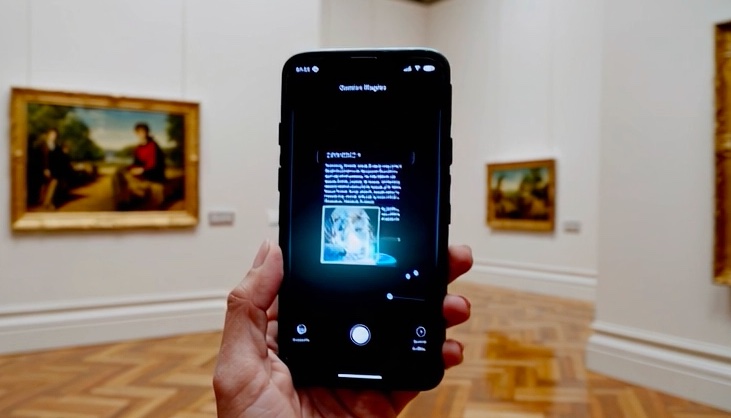
AR-Enhanced Art Guides: Users can point their devices at artworks to view layered content, like artist stories, animation, or additional visuals.
AI-Driven Personalization: Custom recommendations for exhibits based on user preferences and past interactions.
Virtual Reality Galleries: Immersive experiences for users unable to attend physical exhibitions.
Feature Prioritization:
Used the MoSCoW framework to focus on high-impact features that align with user goals:
Must-Have: AR content, intuitive navigation.
Should-Have: Interactive kiosks and virtual tours.
Could-Have: AI for personalized recommendations.
Information Architecture
import React from"react";
import { Card, CardContent } from"@/components/ui/card";
import { Button } from"@/components/ui/button";
import { Input } from"@/components/ui/input";
import { Camera } from"lucide-react";
import { motion } from"framer-motion";
const ArtExhibitionPrototype = () => {
return (
<divclassName="min-h-screen bg-gray-100 p-4 space-y-8"> {/* Home Page */}
<sectionclassName="space-y-4"><h1className="text-3xl font-bold">Discover Art Exhibitions</h1><pclassName="text-gray-600">Explore the latest art exhibitions and personalized recommendations.</p><divclassName="grid grid-cols-1 sm:grid-cols-2 lg:grid-cols-3 gap-4"> {[1, 2, 3].map((exhibit) => (
<Cardkey={exhibit}className="shadow-lg"><CardContentclassName="p-4"><imgsrc={`https://via.placeholder.com/300?text=Exhibit+${exhibit}`}
alt={`Exhibit ${exhibit}`}
className="w-full rounded-lg mb-2" /><h2className="text-xl font-semibold">Exhibit {exhibit}</h2><pclassName="text-gray-600">Immerse yourself in the world of contemporary art.</p><ButtonclassName="mt-2 w-full">Learn More</Button></CardContent></Card> ))}
</div></section> {/* AR Scanning Interface */}
<sectionclassName="space-y-4"><h2className="text-2xl font-bold">AR Art Guide</h2><pclassName="text-gray-600">Point your device at artworks to unlock interactive content.</p><divclassName="relative h-96 bg-black flex items-center justify-center rounded-lg"><CameraclassName="text-white w-12 h-12" /><motion.divinitial={{scale:0.8, opacity:0 }}
animate={{scale:1, opacity:1 }}
transition={{duration:0.5 }}
className="absolute top-8 left-8 bg-white p-4 rounded-lg shadow-md" ><h3className="text-lg font-semibold">Artwork Name</h3><pclassName="text-sm text-gray-600">Artist: Jane Doe</p><pclassName="text-sm text-gray-600">"Explore the inspiration behind this piece."</p></motion.div></div><ButtonclassName="mt-2">Scan Artwork</Button></section> {/* Personalized Tour Summary */}
<sectionclassName="space-y-4"><h2className="text-2xl font-bold">Your Personalized Tour</h2><pclassName="text-gray-600">A summary of your preferences and recommended exhibits.</p><divclassName="bg-white p-4 rounded-lg shadow-md"><h3className="text-lg font-semibold">Based on your interests:</h3><ulclassName="list-disc pl-4 space-y-2"><li>Abstract Art Exhibit - Section B</li><li>Modern Sculpture Showcase - Hall C</li><li>Interactive Digital Art - Room A</li></ul><ButtonclassName="mt-4">Start Your Tour</Button></div></section></div> );
};
exportdefault ArtExhibitionPrototype;
The design phase focused on creating prototypes and refining them through iterative testing.
Wireframe
Developed low-fidelity wireframes for:
Mobile App Home Screen: Featured exhibit previews, AR scanning, and personalized recommendations.
Interactive Kiosk UI: Simplified navigation for users to explore exhibits by themes.
Wireflow
Mapped user journeys through the mobile app and kiosks, highlighting interactions like:
Selecting an exhibit.
Scanning an artwork for AR content.
Saving personalized tour summaries.
Prototype
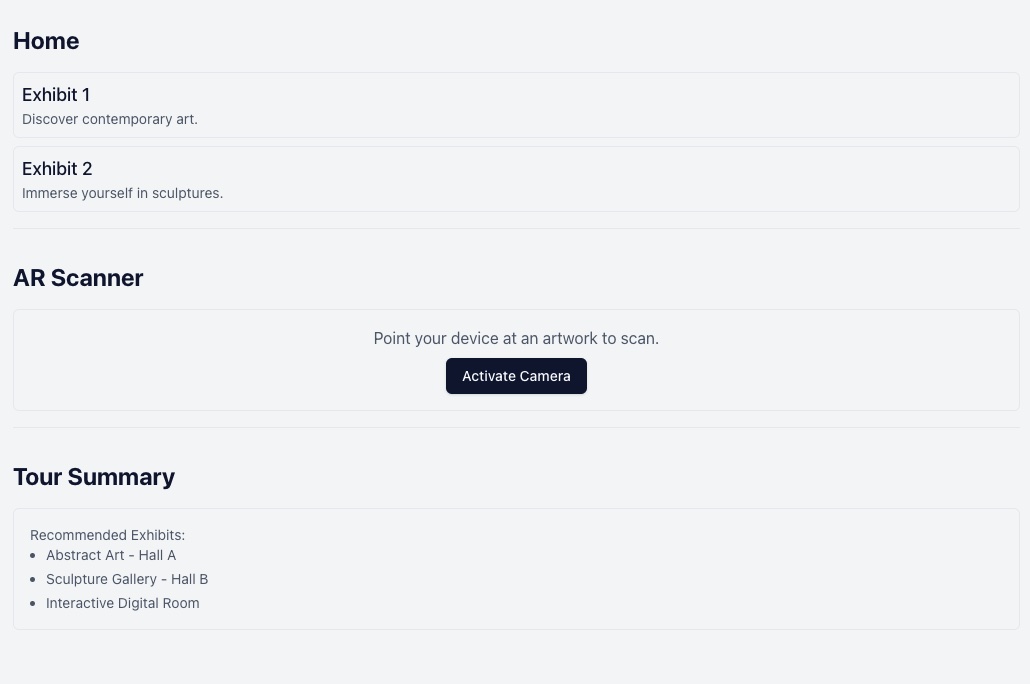
Example screens included:
Home page with featured exhibits.
AR scanning interface.
Personalized tour summary.
Usability Testing
Conducted usability testing with 10 participants:
Goals: Evaluate ease of navigation, clarity of AR instructions, and overall satisfaction.
Key Findings:
90% of users found the AR feature engaging.
Some users needed clearer guidance on initiating AR scans.
The results and reflections phase analyzed the impact of the project and identified areas for future improvement.
Final Outcomes
Quantitative Results:
User Engagement: AR interactions increases user engagement by 40% compared to traditional exhibits.
Qualitative Insights:
Users appreciate the personalized tour summaries, finding them helpful for post-visit sharing.
Feedback highlighted the importance of ensuring AR features are intuitive for all age groups.
.png)
.png)
.png)
.png)
.png)
.png)
.png)
.png)
.png)
.png)

.png)
.png)
.png)
.png)

.png)

.png)
.png)
.png)
.png)
.png)
.png)
.png)
.png)
.png)
.png)
.png)
.png)